How to Create an Online Course Without Overbuilding It

To create an online course, pick one specific result your student wants, outline the fewest lessons that get them there, and test the idea with real people before you record. Then record simple lessons, run a small first group, and improve the course from their feedback. The biggest mistake beginners make is building a huge course before anyone has said they want it.
Courses are one of several product types covered in our Digital Products section, and they ask more of you than most: teaching, recording and supporting students over time. That is worth knowing up front.
Step 1: Choose one clear outcome
A course sells a change. "Learn watercolor" is vague. "Paint a simple landscape you'd hang on your wall, in four weekends" is a course. Write your outcome in one sentence using this template:
Example: "By the end of this course, a new freelance bookkeeper will be able to set up a client's monthly close checklist without missing steps." If you can't fill in the blanks, the topic needs narrowing.
Where do topics come from? Usually from skills you already use at work or in a hobby. Our guide to freelance skills lists skills people pay for, and many of them can become a course once you have helped enough people one on one.
Step 2: Outline backward from the result
Start at the finish line and ask, "What must the student be able to do right before this?" Keep asking until you reach where a beginner starts. That chain becomes your modules.
| Module | Student can now... | Lesson ideas |
|---|---|---|
| 1. Setup | Gather what they need | Tools checklist, workspace, common mix-ups |
| 2. Core skill | Do the basic task once | Walkthrough, practice exercise |
| 3. Repeat | Do it again faster | Second example, shortcuts, error checks |
| 4. Finish | Reach the promised result | Final project, review checklist |
Cut anything that is interesting but not needed for the outcome. Those extras can become a bonus later, or a separate product. If your lessons are mostly reading, an ebook may serve your audience better than a course, and it takes less time to make.
Step 3: Test the idea before you build
Talk to at least five people who fit your student description. You are not pitching. You are learning. Try this script:
"I'm thinking about making a short course on [outcome]. Can I ask you a few questions? What have you already tried? What got in the way? If a course solved this, what would it need to include for you to trust it?"
Listen for repeated words and frustrations. Use them in your lesson titles and sales page later. If nobody describes the problem as important, that is useful information too, and far cheaper to learn now than after recording.
Some creators then invite a small group to join a first run at a reduced "founding" price, clearly labeled as a first version. If you do this, give a real start date, deliver what you promised and refund anyone who asks if things change.
Step 4: Record simply
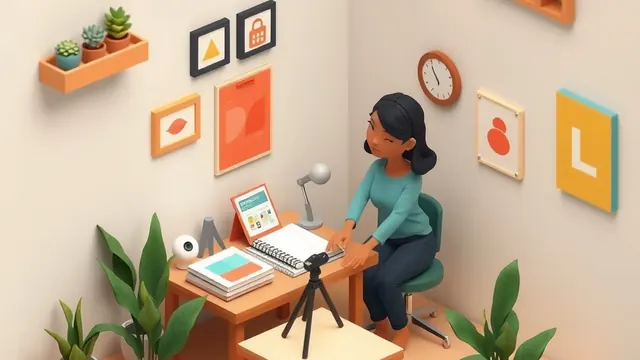
You don't need a studio. Most beginner courses work fine with:
- A quiet room with soft furnishings to cut echo
- Light from a window in front of you, not behind
- Your phone or computer camera, steady on a stand or a stack of books
- Screen recording for any software lessons
Keep lessons short, focused on one task each, and end every lesson with a small action. Script your opening and closing lines, then talk naturally through the middle. Re-record only when a mistake would confuse the student, not every time you stumble.
Worksheets and checklists help students apply what they learn. If you enjoy making those, our guide to templates and printables covers design and licensing basics, and a good worksheet can later sell on its own.
Step 5: Launch small
Your first run is a test, not a finale. Invite your interview group, newsletter readers or a small online community where you already participate honestly. Tell them it is a first version and that you want feedback.
During the run:
- Check in after each module with one question: "What was confusing?"
- Keep a running list of questions students ask more than once
- Note where people stop, because that usually marks a lesson that needs fixing
After the run, update the weakest lessons before you open the course to more people. Plan for ongoing support, too: decide how students reach you, how quickly you'll reply, and how often you'll review lessons that go out of date. A course with a clear support promise you actually keep earns more trust than one with a long list of bonuses.
Be careful with promises
When you describe your course, focus on what students will learn and do, not what they will earn or achieve in their lives. A course about selling crafts can teach listing writing; it can't promise sales. The FTC expects advertising claims to be truthful and backed by evidence, which our copywriting basics guide explains. Results vary widely, and your students deserve to hear that from you.
The same caution applies when you're the buyer. If you are tempted by a course that teaches course-making with big income promises, our list of red flags can help you judge it.
A worked example
Here is a made-up example. Jordan, a hobby baker, wanted to teach sourdough. The first idea was a broad baking course with dozens of lessons. After talking to six people, Jordan found the same frustration again and again: starters that died in the first week. Jordan cut the course down to one outcome, "keep a starter alive and bake one loaf", with five short lessons and a feeding chart. The first group of students asked mostly about schedules, so Jordan added a lesson on fitting feedings around a work week. This is an illustration, not a typical result, and it says nothing about sales.
When a course isn't the right fit
If you don't enjoy teaching or answering questions, consider a different format. Browse the digital product ideas list for products sorted by skill and audience, some of which need far less ongoing support.
Something to do today
Write your one-sentence outcome using the template above. Then list three people you could interview this week and send the first message.
Want a step-by-step business course?
Some people like the structure of a paid guide. This button opens a third-party online business program from one of our advertising partners. Results vary and most people earn little or nothing at first. Its claims are its own, not ours, so weigh them against our red flags checklist.
See the partner program →We may be paid when you click. The program shown can change. Read its terms before you buy anything. How this works
Frequently asked questions
How long should an online course be?
As long as it takes to reach one clear outcome and no longer. Many good beginner courses are a handful of short lessons, and students often prefer a course they can finish over one that feels endless.
Do I need expensive equipment to record a course?
No. A quiet room, decent light from a window and the phone or computer you already own are enough to start. Clear audio matters more than sharp video, so fix sound first.
Should I pre-sell a course before making it?
Pre-selling to a small group can show whether people truly want it, as long as you are honest about the delivery date and refund anyone if you don't deliver. Never take money for something you have no plan to finish.