Print on Demand for Beginners: Designs, Partners and Rights
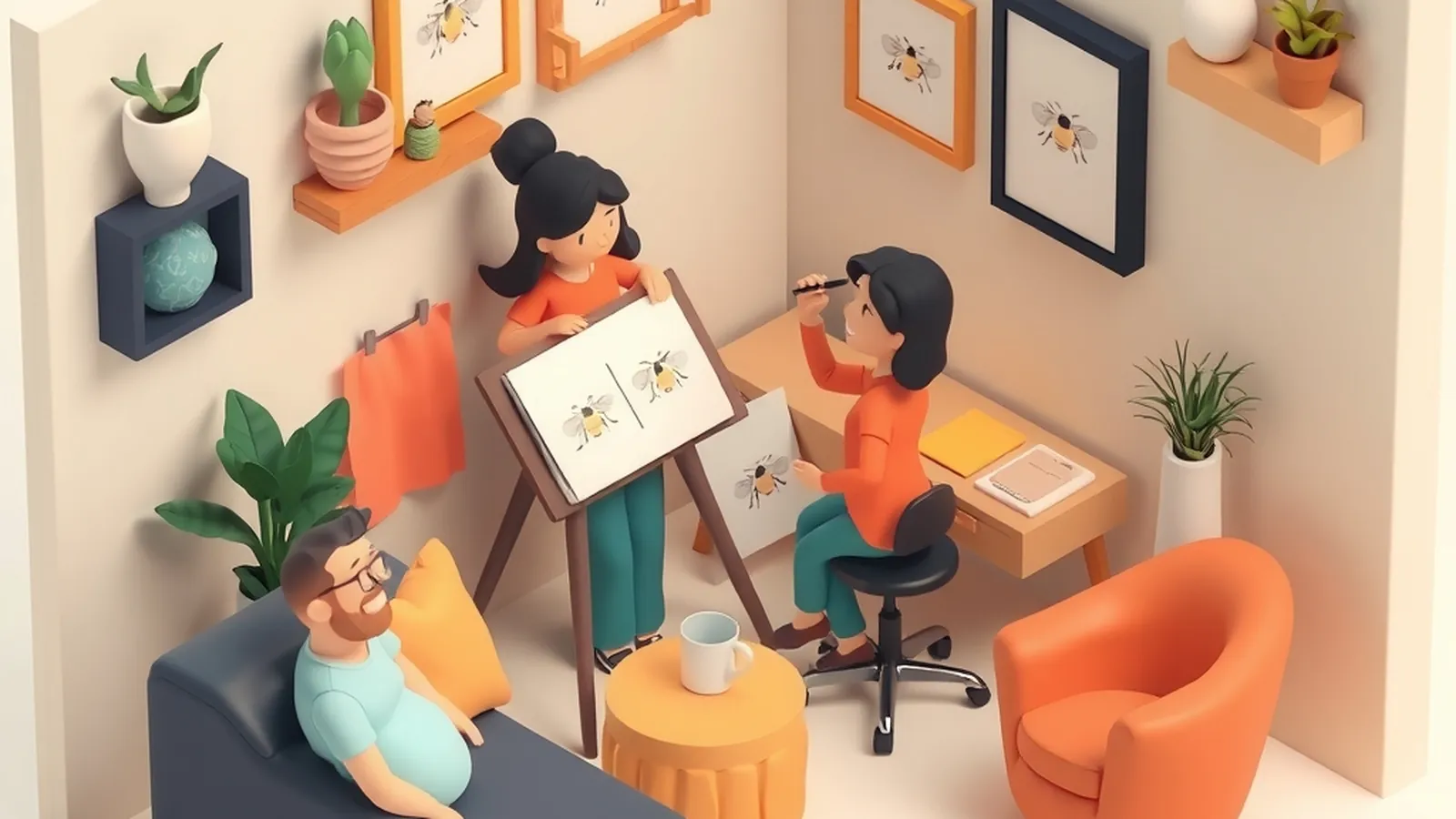
Print on demand is a way to sell products with your designs on them, like shirts, mugs, posters or tote bags, where a printing partner makes and ships each item only after a customer orders it. You create the design and the listing; the partner handles printing, packing and delivery. It keeps inventory risk low, but your designs, your audience and your rights to the artwork decide whether it goes anywhere.
You'll find it alongside the other ways to sell products in our E-commerce section, which can help you weigh it against holding stock yourself.
How print on demand works
- You make or license a design.
- You upload it to a print-on-demand service and place it on blank products.
- You list those products in your shop, either your own store or a marketplace connected to the service.
- A customer orders and pays.
- The partner prints the item, packs it and ships it to the customer.
- You keep the difference between your price and the partner's charge, after platform costs, refunds and marketing.
Every service has its own product range, print methods, timelines and costs. Compare a few, and read their current terms rather than relying on reviews or old videos.
Designs people actually want
The hardest part of print on demand isn't the technology. It's making something a specific group of people wants to wear, use or hang on a wall.
Start with a narrow audience. "People who like coffee" is huge and crowded. "Night-shift nurses who live on coffee" is a group with its own jokes, words and pride. Designs that speak to a real identity tend to stand out more than generic slogans.
Ways to find design ideas without copying anyone:
- Listen to a community you belong to. Inside jokes, shared struggles and favorite phrases are rich material.
- Solve a real need. A packing checklist poster for new campers. A mug with a measurement chart for bakers.
- Play with your own skills. Hand-lettering, simple illustration, photography or pattern design.
- Sketch many, publish few. Make ten rough versions, then pick the two that a few people in your audience like most.
Your rights to the artwork
This part matters more than most beginners realize. In the US, original work gets copyright protection automatically once it's fixed in a tangible form, which means other people's art, photos, characters and lyrics are generally off-limits without permission. Our guide to protecting your work explains copyright in more depth.
A quick rights checklist before you upload anything:
| Question | If yes | If no or unsure |
|---|---|---|
| Did I create this entirely myself? | Good start | Find out who owns each part |
| Does it use a font, image or element from someone else? | Check the license allows products for sale | Replace it with something you can use |
| Did I hire someone to make it? | Get written permission covering products you sell | Don't list it yet |
| Does it reference a brand, team, show or celebrity? | Assume you need permission | Rework the idea |
| Does it closely copy a design I saw online? | Start over | Keep going |
This is general education, not legal advice. If you're unsure about a specific design, talk to an attorney.
Where to sell print-on-demand products
You have a few options, and each changes how you'll find customers.
- On Etsy. Etsy is built for handmade, vintage and craft-supply items, and it has its own seller policies about how items are made and described. If you use a printing partner, read those policies first. Our guide to selling on Etsy goes deeper on listings and shop setup.
- On Amazon. Some sellers reach Amazon shoppers with printed products. Amazon has its own programs and rules, which our guide to selling on Amazon covers in general terms.
- On your own store. You get more control and keep your customer list, but you'll need to bring the traffic yourself.
Quality and customer experience
Because you never touch the finished product, order samples of everything before you list it. Check print sharpness, color, how the item washes or wears, and how it arrives. Take your own photos of the sample if you can, since mockups can look better than reality.
Set honest delivery estimates. Printing adds time before the item even ships. If you've read our guide on dropshipping explained, many of the same supplier lessons apply: you're the face of the order, so delays and defects land on you.
If printables appeal to you too
Some designers sell both physical prints and digital files people print at home. Digital files skip shipping entirely but bring their own licensing questions. Our guide to selling templates and printables covers that side, and it can be a good way to test a design before putting it on a physical product.
A worked example
Marcus is an invented example, and nothing here is a typical outcome.
Marcus is a hobby beekeeper who sketches. They draw five simple bee illustrations and share them in a local beekeeping group, asking which ones people would wear. Two get strong reactions. Marcus orders a sample shirt and a sample mug of each, finds one print looks muddy on dark fabric, and redraws it with thicker lines. They list the four products with photos of the real samples and a delivery estimate that includes print time. Sales are slow at first, so Marcus focuses on posting new sketches in beekeeping spaces where self-promotion is allowed, and learns which themes get the most interest.
Watch out for big promises
Print on demand gets marketed as "upload and earn while you sleep." Results vary widely, and many shops make few or no sales. Courses that promise trending design lists or steady traffic deserve caution. Our section on choosing a program explains how to judge an offer before you pay.
Your task for today
Pick one group of people you understand well. Write down:
- Three phrases or jokes that only that group would get
- One practical need a product could help with
- Which product type fits best, such as a shirt, mug, sticker or poster
Then sketch one rough design. It doesn't need to be good yet. It just needs to exist so you can show it to someone in that group.
Want a step-by-step business course?
Some people like the structure of a paid guide. This button opens a third-party online business program from one of our advertising partners. Results vary and most people earn little or nothing at first. Its claims are its own, not ours, so weigh them against our red flags checklist.
See the partner program →We may be paid when you click. The program shown can change. Read its terms before you buy anything. How this works
Frequently asked questions
Do I need to be an artist to do print on demand?
Not necessarily, but you do need designs you have the right to sell. Some people draw, some use simple type-based designs, and some hire a designer and get written permission to use the work on products. Copying other people's art or characters is not okay.
Can I use images I find online for print on demand?
Generally no, not without permission or a proper license. Images online are usually protected by copyright, and using them on products you sell can get your listings removed and lead to legal trouble. Read the license terms carefully and ask an attorney if you are unsure.
Is print on demand better than dropshipping?
They solve different problems. Print on demand lets you sell your own designs on blank products made per order, while dropshipping usually means reselling a supplier's existing products. Print on demand gives you more say over what makes your product different, but both carry quality and delivery risks you have to manage.